Building an ADU in San Jose is one of the most significant construction projects a homeowner can undertake. The combination of state regulations, city permit requirements, utility coordination, and construction complexity means that the builder you choose will shape the outcome more than almost any other decision you make. Choosing the wrong ADU builder in San Jose can mean permit delays, cost overruns, code violations, or a finished unit that cannot be legally rented.
This guide covers how to evaluate ADU builders in San Jose, what the local permit process looks like, how SB 9 and SB 13 affect your options, the difference between garage conversions and ground-up construction, and what realistic timelines and costs look like in 2026. For project-specific planning, visit our ADU services page or connect through our contact page.
Why ADU Builder Selection Matters More in San Jose
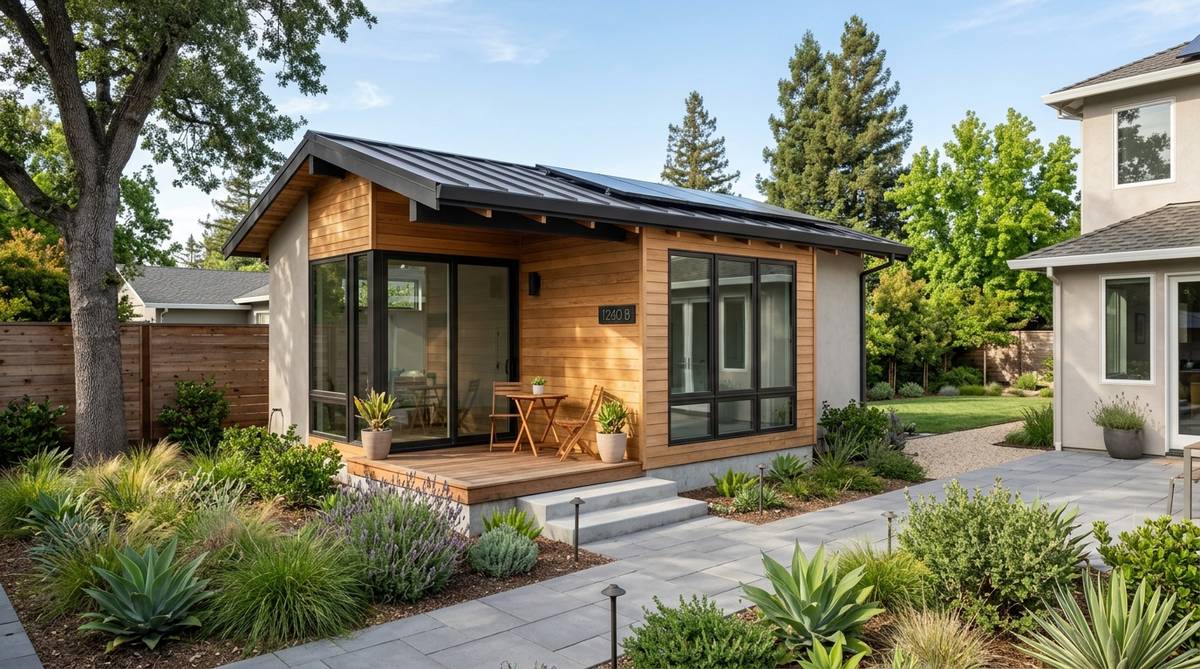
San Jose is one of the most active ADU markets in California. The combination of high housing costs, large lot sizes in many neighborhoods, and strong rental demand has made ADU construction a priority for thousands of homeowners across the city. That demand has also attracted a wide range of builders, from experienced design-build firms to unlicensed operators who see ADU work as an opportunity.
The stakes are high. An ADU is a permanent structure on your property. It affects your property taxes, your insurance, your financing options, and your ability to sell or refinance. A legally permitted, well-built ADU adds real value. An unpermitted or poorly constructed one creates liability and can require expensive corrections before you can rent it or sell your home.
San Jose permit process for ADUs is more streamlined than it was several years ago, but it still requires complete plan sets, code-compliant designs, and coordination with the city building department. A builder who does not understand San Jose specific requirements will generate correction notices, miss inspection windows, and extend your timeline in ways that cost real money.
What to Look for in a San Jose ADU Builder
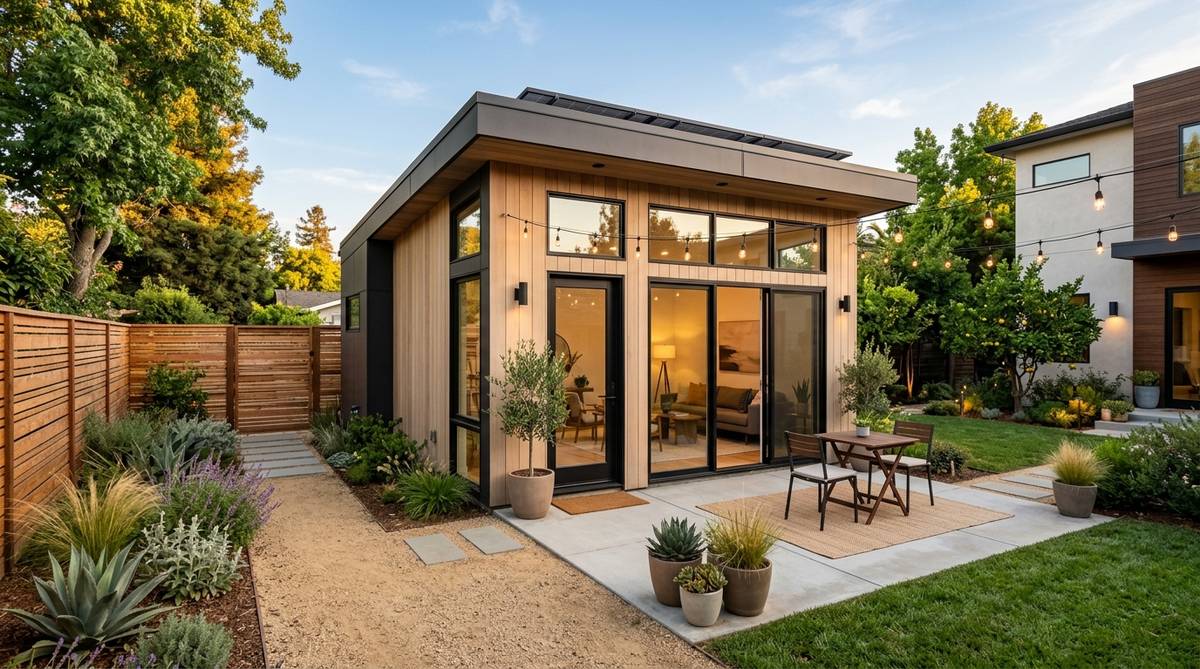
Evaluating ADU builders in San Jose requires looking beyond general contractor credentials. ADU construction involves a specific combination of skills: design, permitting, structural engineering, utility coordination, and construction management. Not every licensed contractor has experience with all of these elements in the context of San Jose specific requirements.
CSLB licensing. Any ADU builder in San Jose must hold a valid California Contractors State License Board (CSLB) license. For most ADU projects, a Class B General Building license is appropriate. Verify the license at cslb.ca.gov before any other conversation. Confirm the license is active, covers the right classification, and has no disciplinary history.
San Jose permit experience. Ask specifically whether the builder has pulled ADU permits in San Jose, not just in the Bay Area generally. San Jose has its own permit portal, its own plan review standards, and its own fee structure. A builder who has navigated San Jose process before will prepare better submissions, respond to correction notices faster, and keep your project on schedule.
Design and engineering capability. ADU permits in San Jose require complete architectural drawings and, for detached units, structural engineering calculations. Some builders subcontract design and engineering to outside firms, which can work well if the relationships are established. Others handle design in-house. Either approach can be effective, but you want to understand who is responsible for the permit drawings and how corrections are managed.
References from completed ADU projects. Ask for references from ADU projects completed in San Jose within the past two years. Call those references and ask specific questions: Did the project finish on time? Were there significant cost changes after the contract was signed? How did the builder handle permit corrections or construction surprises? Would you hire them again?
Transparency about costs and timeline. A qualified ADU builder in San Jose will give you a realistic cost range and timeline based on your specific lot and project type. Be cautious of builders who quote unusually low numbers or promise unusually fast timelines without seeing your property. ADU costs in San Jose are driven by real factors, and a builder who ignores those factors in their initial quote will find them later in change orders.
SB 9 and SB 13: What the State Laws Mean for San Jose Homeowners
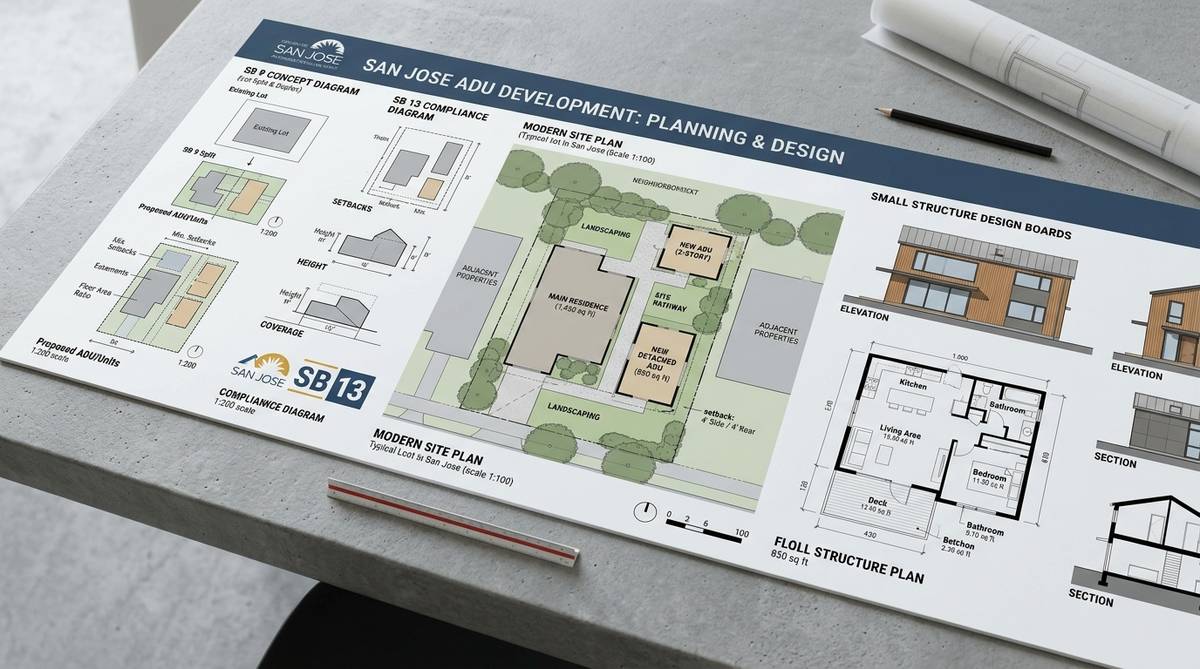
California ADU legislation has evolved significantly over the past several years, and understanding the current framework helps you make better decisions about your project.
SB 13 (effective January 2020) eliminated owner-occupancy requirements for ADUs on many properties, removed impact fees for ADUs under 750 square feet, and required cities to process ADU applications within 60 days. These changes made ADU development significantly more accessible for San Jose homeowners.
SB 9 (effective January 2022) allows homeowners on single-family lots to split their lot into two parcels and build up to two units on each parcel, subject to certain conditions. For ADU planning purposes, SB 9 is most relevant when homeowners are considering whether to build an ADU, pursue a lot split, or combine both strategies. The interaction between SB 9 lot splits and ADU regulations is complex, and a builder or attorney familiar with both frameworks can help you understand your options.
The practical effect of these laws for San Jose homeowners is that ADU development is more feasible than it was five years ago. Impact fees are reduced or eliminated for smaller units, the permit timeline is faster for complete applications, and owner-occupancy requirements no longer apply to most properties. However, state law sets a floor, not a ceiling. San Jose still has its own objective standards for setbacks, height, lot coverage, and design compatibility that apply to ADU projects.
San Jose ADU Permit Process: The Streamlined Pathway
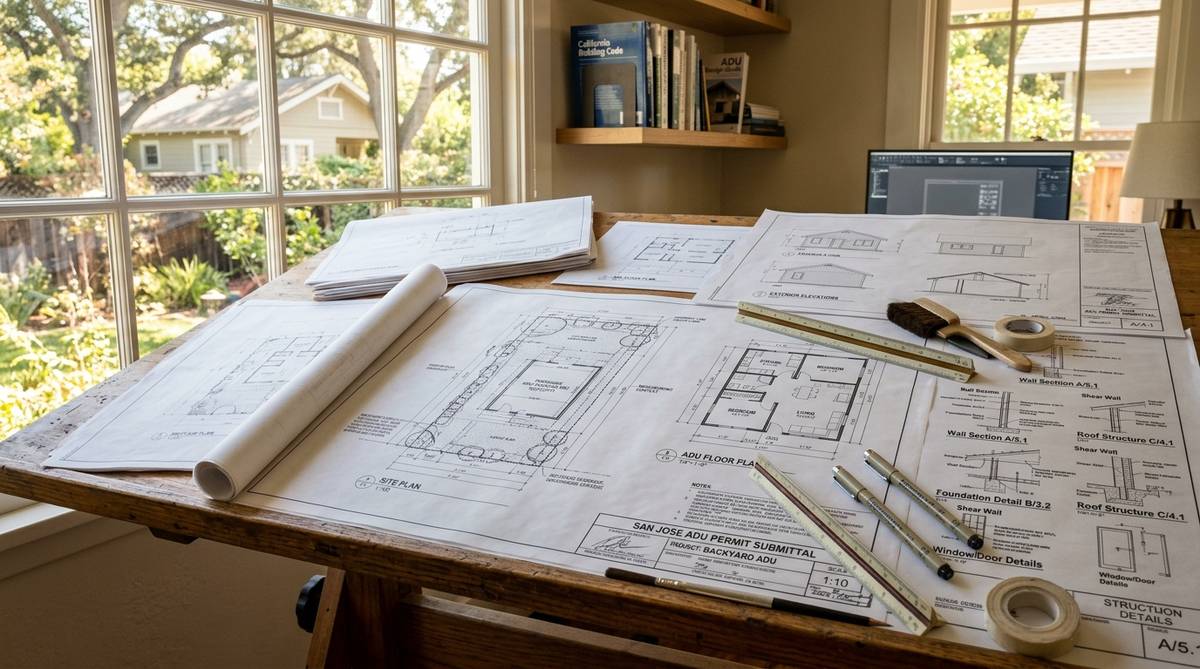
San Jose has implemented a streamlined ADU permit pathway for projects that meet the city standard design criteria. This pathway is designed to reduce plan review time and make the permit process more predictable for homeowners and builders.
To qualify for the streamlined pathway, an ADU project generally needs to meet San Jose standard setback requirements (typically four feet from rear and side property lines for detached ADUs), comply with height limits (typically 16 feet for detached ADUs), and use a design that does not require discretionary review or variances.
The streamlined process works as follows:
- Pre-application review: Many builders recommend a pre-application meeting with San Jose building department to confirm the project approach and identify any site-specific issues before investing in full permit drawings.
- Complete plan submittal: Submit architectural drawings, site plan, and structural calculations (for detached units) through San Jose online permit portal.
- Plan review: San Jose targets a 60-day review window for complete ADU applications. Incomplete submissions or projects requiring corrections will take longer.
- Permit issuance: Once approved, the permit is issued and construction can begin.
- Inspections: Required at framing, rough mechanical, insulation, and final stages.
- Certificate of occupancy: Issued after passing all final inspections, allowing the unit to be legally occupied and rented.
A builder who has completed multiple ADU projects in San Jose will know how to prepare submissions that move through this process efficiently. They will also know which types of projects are likely to generate correction notices and how to address those issues proactively in the initial submission.
Garage Conversion vs Ground-Up ADU: Which Is Right for Your Property?
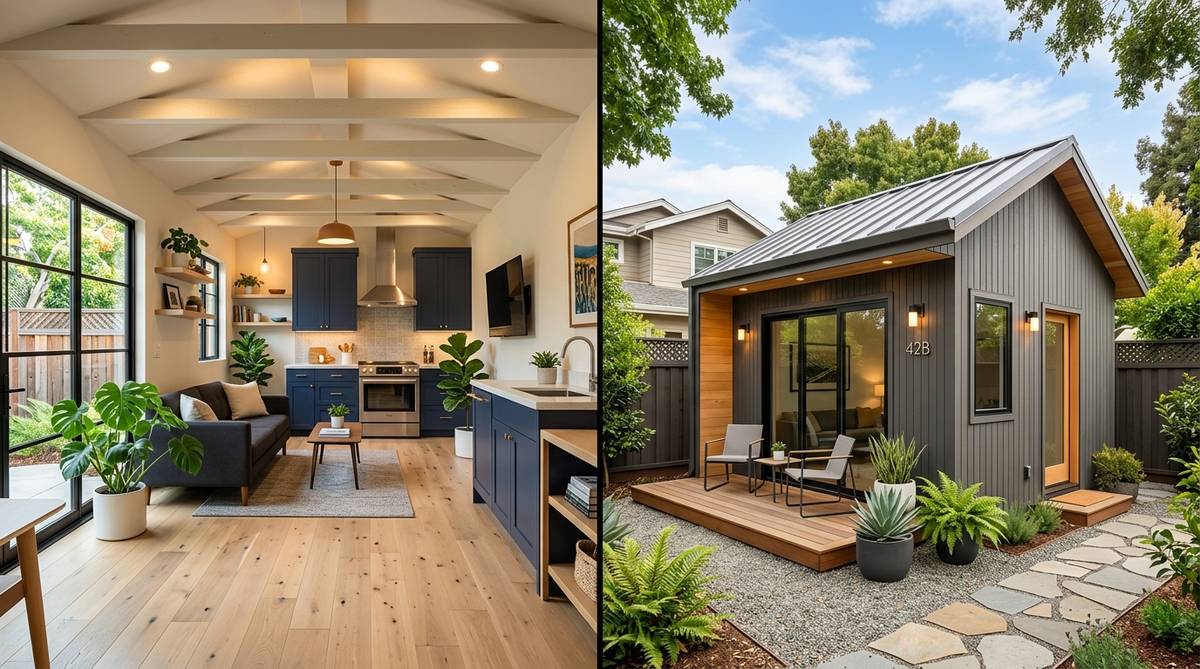
The choice between converting an existing garage and building a new detached ADU is one of the most consequential decisions in ADU planning. Both approaches can produce excellent results, but they have different cost profiles, different construction timelines, and different implications for your property.
Garage conversions are generally less expensive than ground-up construction because the structure already exists. You are converting existing square footage rather than building new. In San Jose, a garage conversion ADU typically costs $80,000 to $180,000 depending on the size of the garage, the condition of the existing structure, and the finish level of the new unit.
The challenges with garage conversions in San Jose include:
- Ceiling height: Many garages have ceiling heights of eight feet or less, which can feel cramped in a living space. Some conversions require raising the roof or accepting lower ceilings.
- Slab condition: Garage slabs are often thinner than residential slabs and may not be level. Plumbing installation requires cutting into the slab, and the slab condition affects how that work is done.
- Utility connections: Garages typically have limited electrical service and no plumbing. Adding a kitchen, bathroom, and adequate electrical service requires new utility runs.
- Parking replacement: San Jose generally does not require replacement parking for ADU conversions, but this is worth confirming for your specific property.
Ground-up detached ADUs offer more design flexibility and typically produce a higher-quality living environment. They can be positioned to maximize privacy, natural light, and outdoor space. In San Jose, a detached ADU of 500 to 800 square feet typically costs $200,000 to $350,000 depending on site conditions, finish level, and utility complexity.
The challenges with ground-up construction include higher cost, longer construction timeline, and more complex permit requirements. Site access for construction equipment, utility trench routing, and foundation work are all factors that affect both cost and schedule.
For many San Jose homeowners, the right choice depends on their specific lot, their budget, and their intended use for the unit. A builder who has completed both types of projects can help you evaluate the tradeoffs for your property.
Typical Timelines and Costs in San Jose (2026)
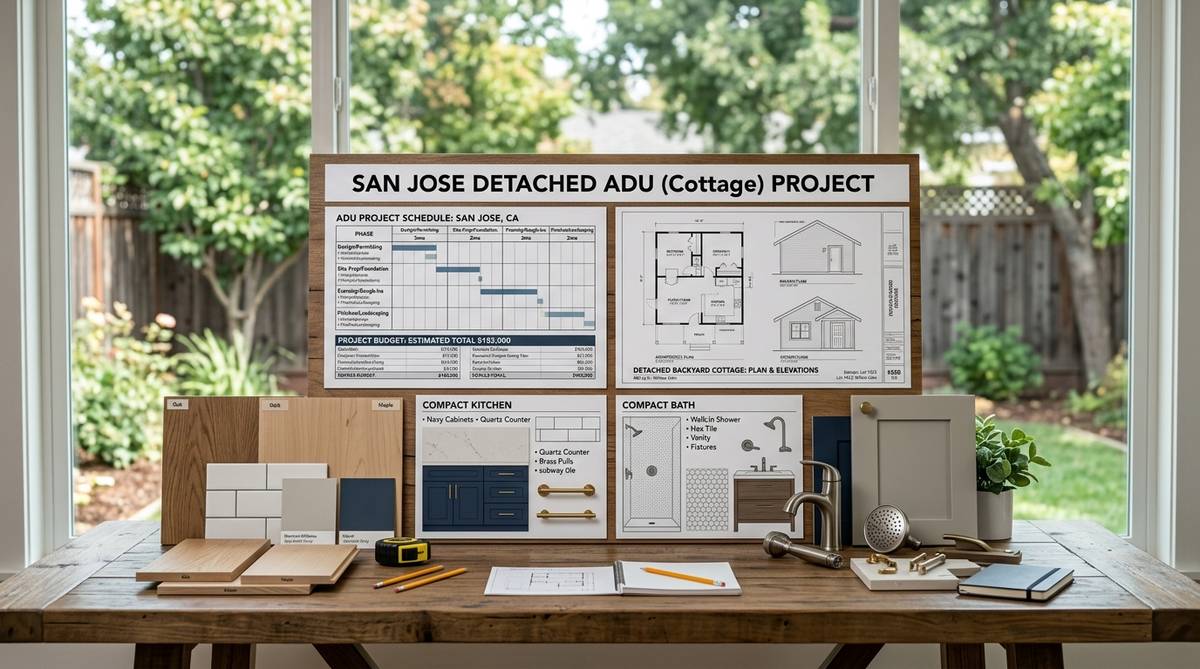
ADU projects in San Jose follow a predictable sequence of phases, and understanding the timeline helps you plan around construction disruption and financing needs.
| Phase | Typical Duration |
|---|
| Feasibility assessment and design | 4 to 8 weeks |
| Permit preparation and submittal | 2 to 4 weeks |
| City plan review | 4 to 10 weeks |
| Construction (garage conversion) | 3 to 5 months |
| Construction (detached ADU) | 5 to 8 months |
Total project duration from initial consultation to certificate of occupancy typically runs 10 to 16 months for a detached ADU and 8 to 12 months for a garage conversion. Projects with complex site conditions, utility upgrades, or permit corrections will take longer.
For a detailed cost breakdown by ADU type, see our ADU cost guide for California, which covers the full range of cost drivers in the Bay Area market.
Neighborhoods in San Jose Where ADUs Make Sense
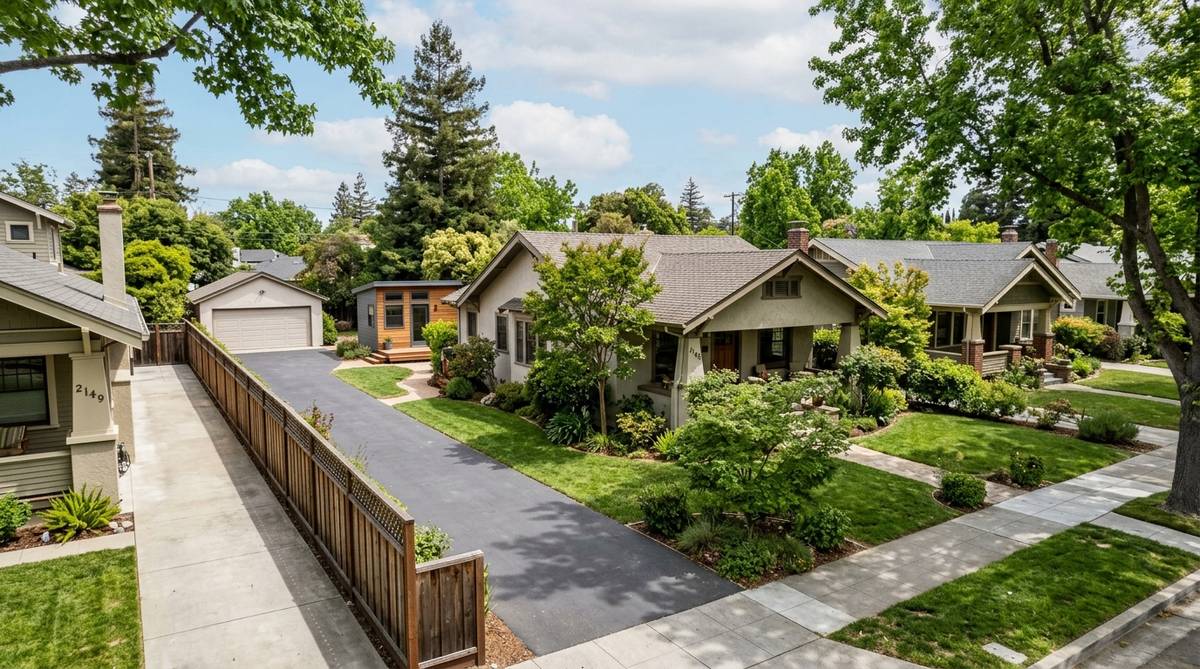
ADU feasibility in San Jose depends heavily on lot size, existing structures, and neighborhood zoning. Three areas of the city are particularly well-suited for ADU development.
Berryessa has a mix of single-family homes on larger lots, many built in the 1960s and 1970s. Lot sizes in Berryessa often support detached ADU construction with adequate setbacks and access. The neighborhood proximity to BART and major employment corridors also supports strong rental demand for completed units.
Evergreen features some of the largest residential lots in San Jose, particularly in the hillside areas. The combination of lot size and strong neighborhood character makes Evergreen a natural fit for detached ADU construction. Site access and grading can be more complex on hillside lots, which is worth factoring into early cost estimates.
East San Jose has a high concentration of single-family homes on standard lots where garage conversions are often the most practical ADU approach. The neighborhood housing stock includes many properties with detached garages that are well-positioned for conversion. Rental demand in East San Jose is strong, and ADU rental income can meaningfully offset construction costs over time.
What to Expect During Construction
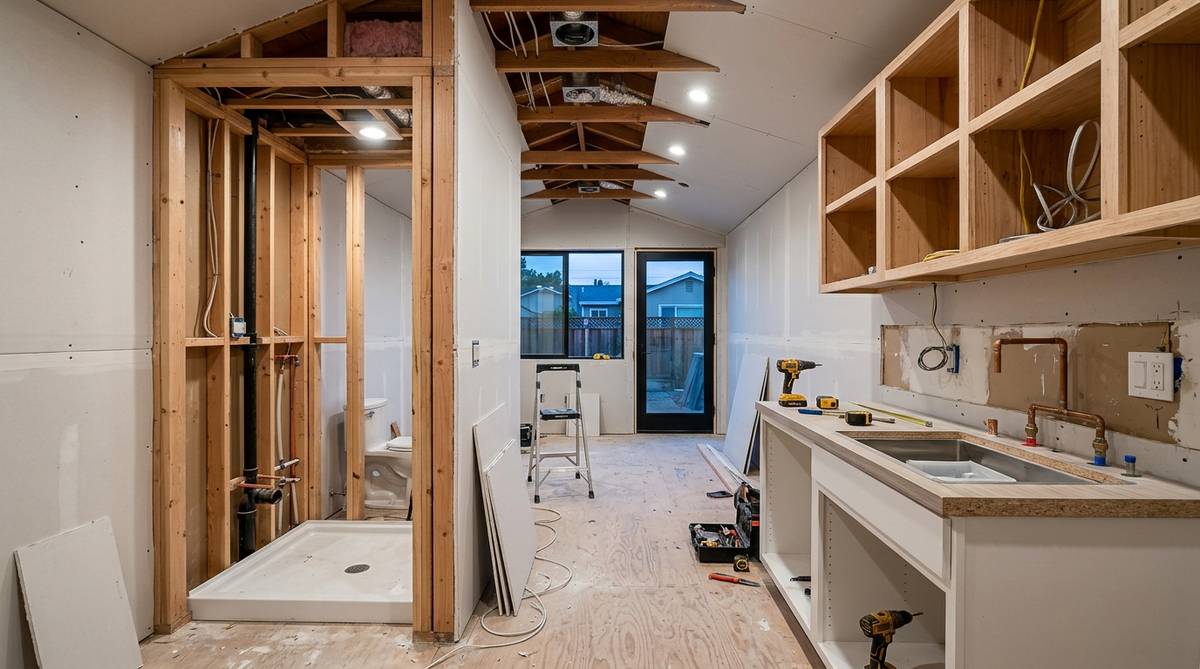
ADU construction in San Jose involves several phases that affect your daily life and your property. Understanding what to expect helps you prepare and reduces stress during the project.
Site preparation involves clearing the construction area, establishing utility access points, and setting up temporary facilities for the construction crew. For detached ADUs, this phase may include tree removal, grading, and drainage work.
Foundation work is the first major construction milestone. For detached ADUs, this typically involves excavation, forming, and pouring a concrete foundation. For garage conversions, the existing slab is evaluated and modified as needed.
Framing and structure follows foundation work. This is when the unit takes shape and inspections begin. San Jose requires a framing inspection before walls are closed.
Mechanical rough-in covers plumbing, electrical, and HVAC installation before walls are finished. This phase requires multiple inspections and is often the most coordination-intensive part of the project.
Insulation and drywall follow mechanical rough-in approval. This phase moves quickly relative to the earlier phases.
Finish work includes flooring, cabinetry, fixtures, painting, and exterior finishes. This is when the unit starts to look like a home.
Final inspections and certificate of occupancy complete the process. San Jose requires a final inspection before the unit can be legally occupied.
For a detailed look at how Maison Remodeling manages ADU projects from feasibility through final inspection, visit our process page. You can also read our complete ADU building guide for a broader overview of the ADU process.
Ready to start? Contact Maison Remodeling at (408) 384-3317 or visit our contact page to schedule a consultation.
Frequently Asked Questions
How much does it cost to build an ADU in San Jose in 2026?
ADU costs in San Jose vary by type. Garage conversions typically run $80,000 to $180,000. Detached ADUs of 500 to 800 square feet commonly cost $200,000 to $350,000. Costs depend on site conditions, finish level, utility complexity, and permit fees. For a detailed breakdown, see our ADU cost guide.
How long does it take to build an ADU in San Jose?
Total project duration from initial consultation to certificate of occupancy typically runs 10 to 16 months for a detached ADU and 8 to 12 months for a garage conversion. The permit review phase alone takes four to ten weeks in San Jose, and construction follows after permit approval.
Do I need a permit to build an ADU in San Jose?
Yes. All ADU construction in San Jose requires permits. Building without permits creates code enforcement risk, prevents legal rental of the unit, and can require costly corrections before you can sell or refinance your home. A qualified ADU builder will manage the entire permit process as part of their scope.
Can I convert my garage to an ADU in San Jose?
Yes. Garage conversions are one of the most common ADU types in San Jose. The feasibility depends on the garage size, ceiling height, slab condition, and utility access. San Jose generally does not require replacement parking for ADU conversions, but your specific property conditions should be evaluated by a builder before you commit to this approach.
What is the difference between SB 9 and a standard ADU in San Jose?
A standard ADU adds a secondary dwelling unit to your existing single-family lot without changing the lot configuration. SB 9 allows you to split your lot into two parcels and potentially build additional units on each parcel. SB 9 is most relevant when you are considering more intensive development of your property. For most homeowners building a single ADU, the standard ADU pathway is simpler and faster.