Home Improvement
Energy Efficient Home Upgrades That Pay for Themselves
The right energy efficient home upgrades cut utility bills and qualify for Bay Area rebates. Here is what pays back fastest and how to bundle upgrades into your remodel.
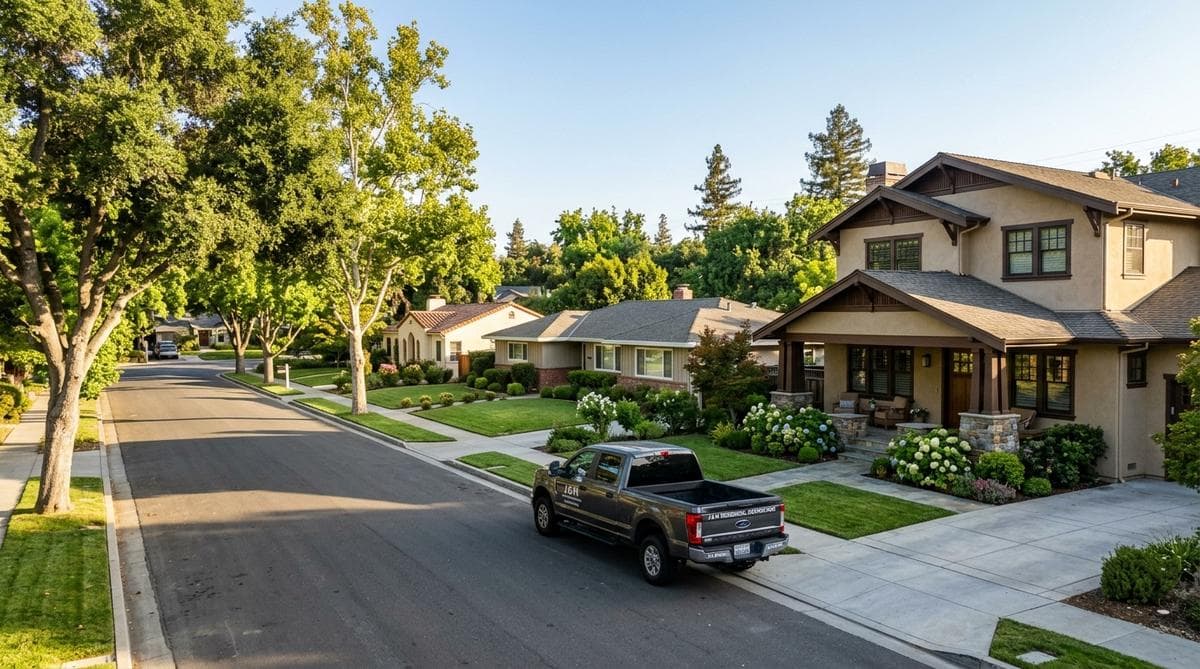
Finding the right general contractor in San Jose is one of the most consequential decisions you will make before a remodel. The contractor you hire controls your budget, your timeline, your permit compliance, and the quality of every trade that touches your home. In a market as active as Silicon Valley, the difference between a smooth project and a costly nightmare often comes down to how carefully you vetted the person holding the license.
This guide walks through what to look for in a San Jose general contractor, how the local permit process works, red flags to avoid, and how to compare bids the right way. If you are already evaluating contractors, you can also review our services, read about our process, or check our reviews to see how Maison Remodeling approaches projects across the South Bay.
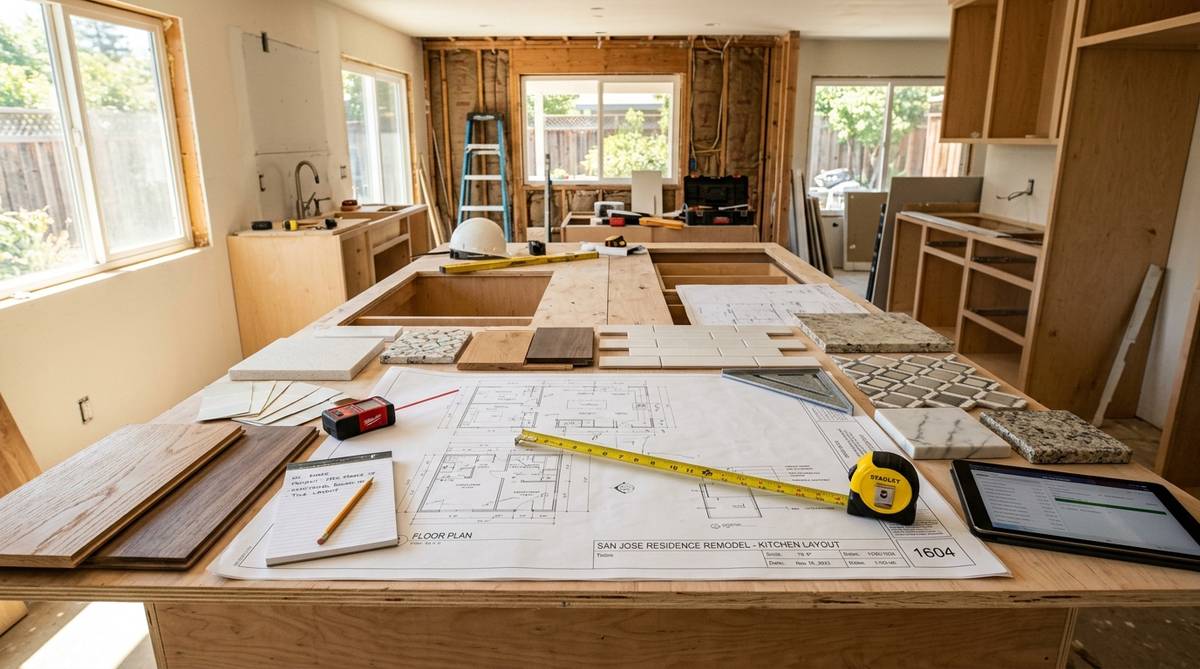
A general contractor manages the full scope of a construction or remodeling project. They coordinate subcontractors, pull permits, schedule inspections, manage material deliveries, and serve as the single point of accountability from demo to final walkthrough. On a kitchen remodel, bathroom renovation, home addition, or whole-home project, the GC is the person who keeps every moving part aligned.
In San Jose, a licensed general contractor holds a Class B license from the California Contractors State License Board (CSLB). That license covers residential and commercial construction projects and requires passing a trade exam, demonstrating financial responsibility, and carrying workers compensation insurance. Without a valid CSLB license, a contractor cannot legally pull permits in California, which means any work they do is unpermitted by default.
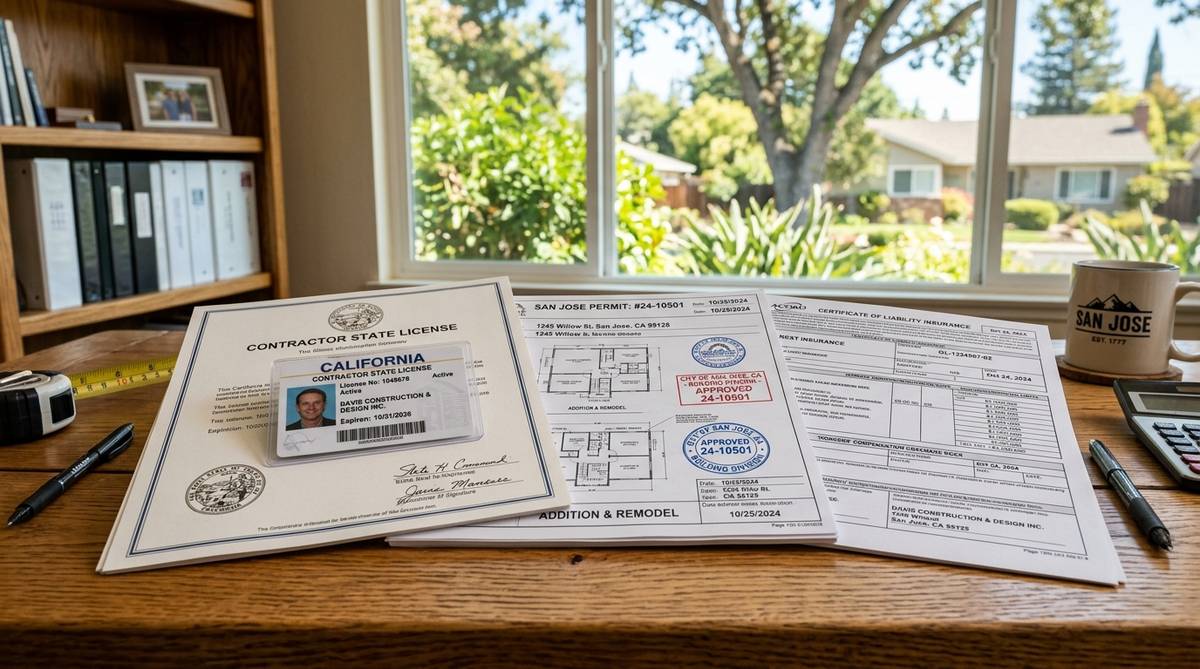
Before you have a single conversation about scope or price, verify the contractor CSLB license at cslb.ca.gov. The lookup takes about 30 seconds and tells you whether the license is active, what classification it covers, whether there are any disciplinary actions on record, and when the license expires.
What to confirm on the CSLB lookup:
A contractor who resists sharing their license number or asks you to look it up yourself after the fact is a red flag. Legitimate contractors in San Jose keep their license information current and share it without hesitation.
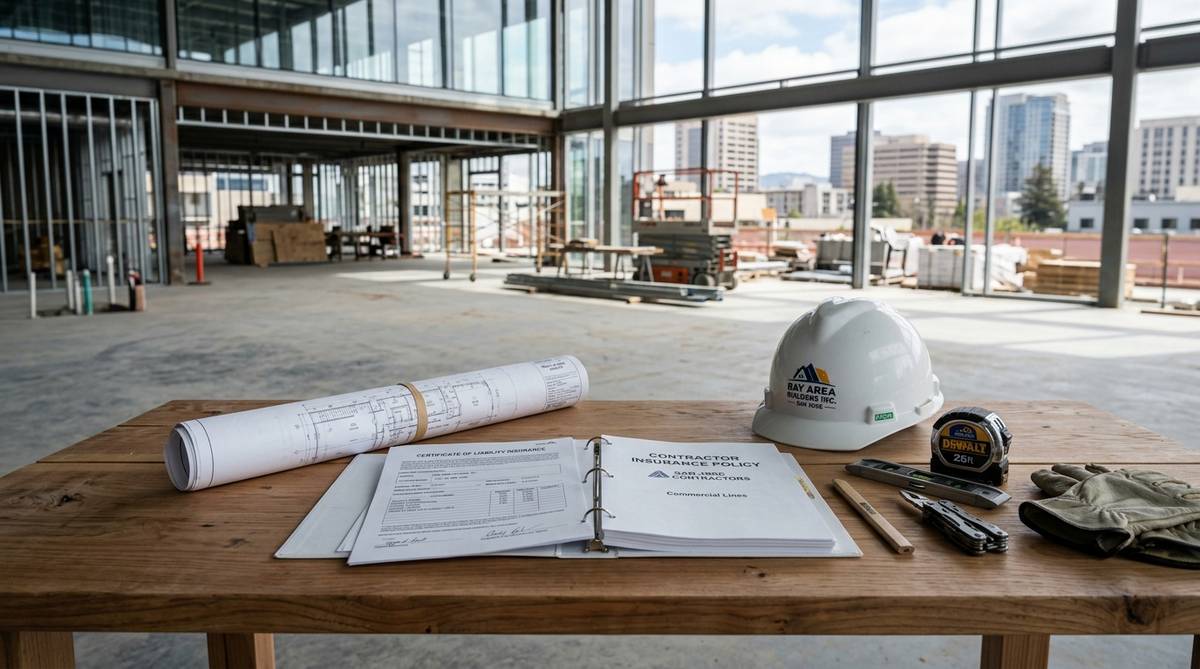
Beyond the CSLB license, a qualified general contractor in San Jose should carry two types of insurance before work begins on your property.
General liability insurance protects you if the contractor or their crew causes property damage during the project. A minimum of $1 million per occurrence is standard for residential remodeling work in the Bay Area. Ask for a certificate of insurance naming you as an additional insured, and verify the policy is current.
Workers compensation insurance covers medical costs and lost wages if a worker is injured on your property. In California, contractors with employees are required by law to carry workers comp. If a contractor claims they have no employees and uses only subcontractors, ask how those subs are classified and whether each sub carries their own coverage. Gaps in workers comp coverage can expose you to liability if someone is hurt on your job site.
Never accept verbal assurances about insurance. Request certificates directly from the contractor insurance provider, not a document the contractor prints themselves.
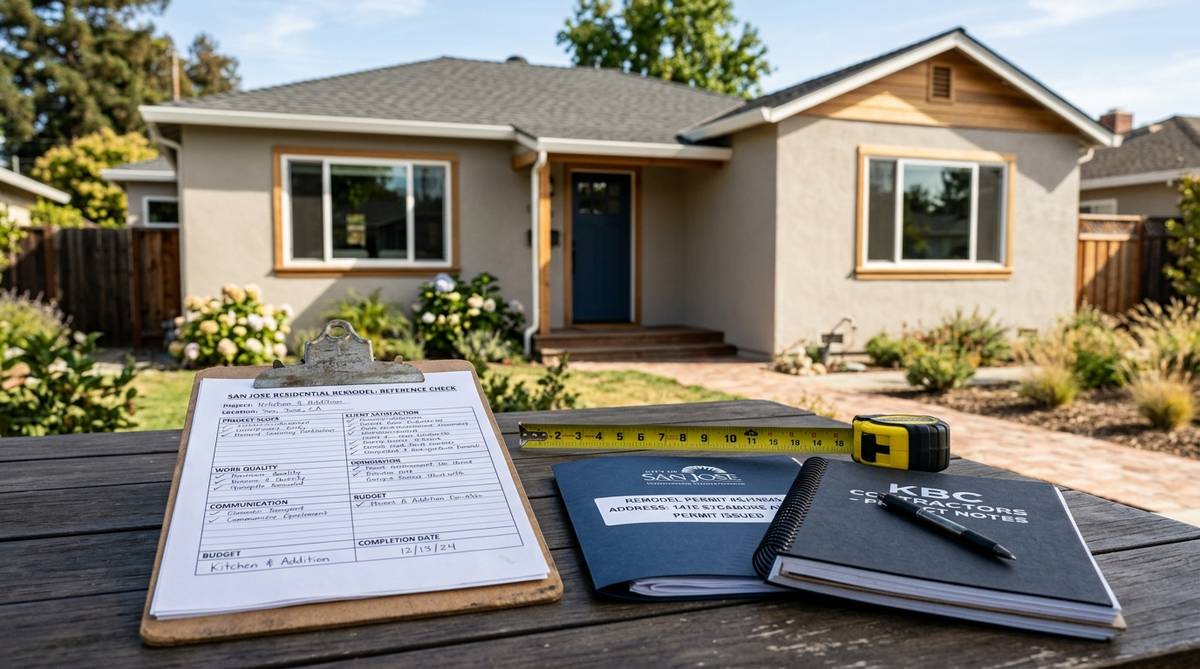
References are one of the most underused tools in contractor selection. Most homeowners ask for them and then never call. The ones who do call often ask vague questions and get vague answers. Here is how to make references actually useful.
Ask for three to five references from projects completed in the past two years, specifically in San Jose or nearby communities. Projects in Willow Glen, Almaden Valley, Rose Garden, Cambrian, and Evergreen are ideal because they reflect local permit experience and neighborhood-specific construction conditions.
When you call, ask specific questions:
A contractor with strong references will encourage you to call them. One who hedges, provides only email contacts, or offers references from projects several years ago deserves more scrutiny.
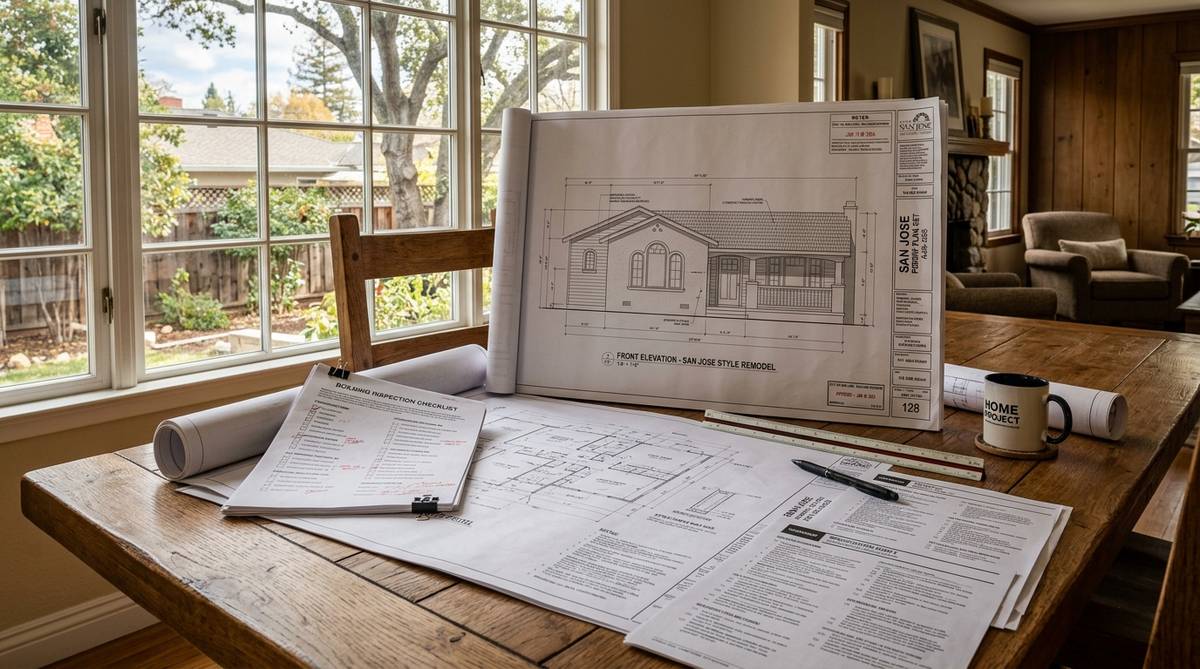
San Jose requires permits for most structural, electrical, plumbing, and mechanical work. This includes kitchen remodels that involve moving walls or appliances, bathroom renovations with plumbing changes, home additions, ADU construction, and any work that affects the building envelope or load-bearing elements.
The City of San Jose Planning, Building and Code Enforcement (PBCE) department handles permit review. For most residential projects, the process follows these stages:
A qualified general contractor in San Jose manages this entire process. They know which projects require over-the-counter approval versus full plan review, how to respond to correction notices efficiently, and how to schedule inspections to keep construction moving. If a contractor tells you permits are not necessary for work that clearly requires them, that is a serious red flag.
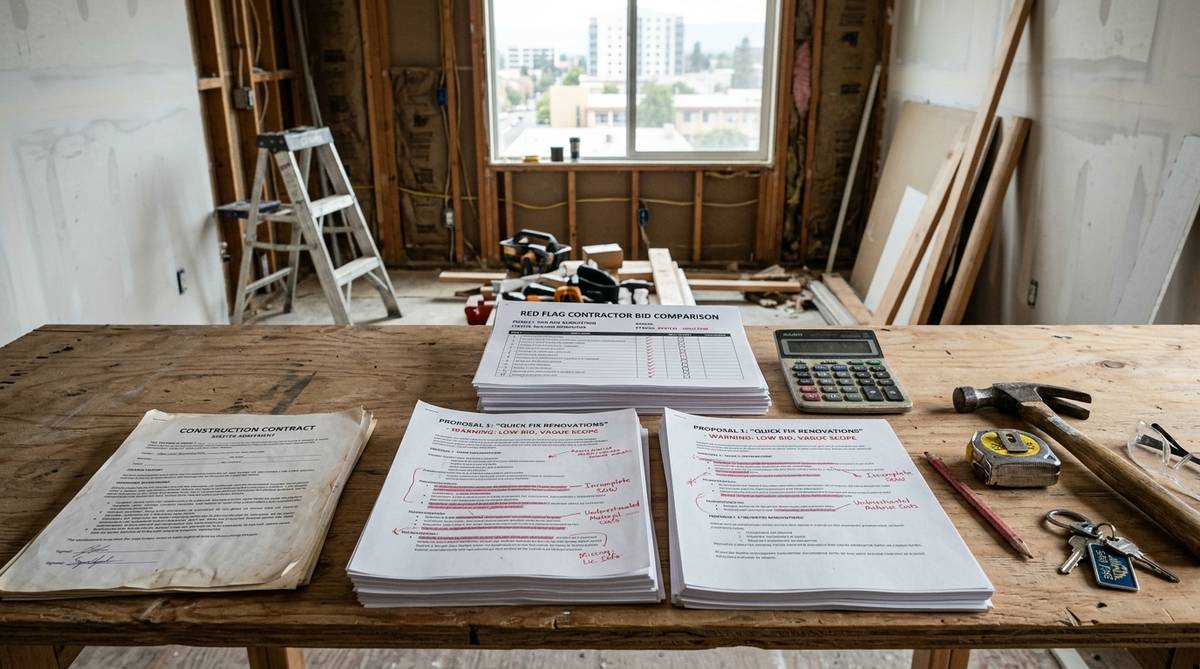
The Bay Area construction market attracts both excellent contractors and opportunistic ones. These warning signs are worth taking seriously before you sign anything.
Unusually low bids. If one quote is 30% to 40% below the others, it usually means something is excluded, the contractor plans to use unlicensed labor, or they are underestimating scope and will recover margin through change orders. In San Jose, legitimate licensed contractors have real overhead: insurance, licensing fees, workers comp, and Bay Area labor rates. A bid that ignores those realities is not a deal.
Requests for large upfront payments. California law limits contractor deposits to 10% of the contract price or $1,000, whichever is less, for home improvement contracts. A contractor who asks for 30%, 40%, or 50% upfront before work begins is either in financial trouble or planning to disappear. Progress payments tied to construction milestones are standard and appropriate.
No written contract. Every legitimate remodeling project in San Jose should have a written contract that specifies scope, materials, timeline, payment schedule, permit responsibilities, and warranty terms. Verbal agreements are unenforceable and leave you with no recourse if problems arise.
Pressure to decide immediately. High-quality contractors in San Jose are busy, but they do not pressure homeowners into same-day decisions. If a contractor tells you the price is only good for 24 hours or that they have another client ready to take your slot, that is a sales tactic, not a scheduling reality.
Unlicensed subcontractors. Ask your GC how they vet and manage subcontractors. A responsible general contractor in San Jose uses licensed, insured subs and takes responsibility for their work. If the GC cannot tell you who is doing the electrical or plumbing, that is a problem.
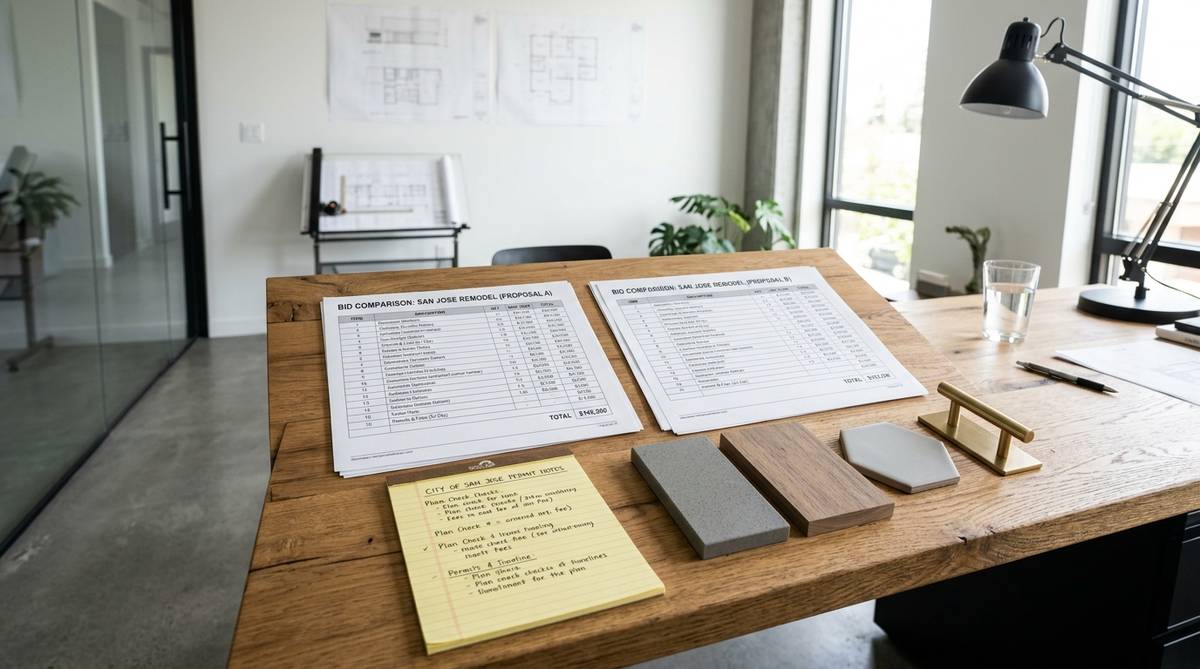
Getting three bids is standard advice, but comparing them correctly is where most homeowners struggle. Two bids can have the same total and completely different assumptions. One may include permit fees, design coordination, and a full finish allowance. The other may exclude all three.
When reviewing bids for a San Jose remodeling project, ask each contractor to break out:
A lower bid that excludes permits, uses unlicensed subs, and carries no warranty is not a better deal. It is a different product. The goal is to compare equivalent scopes, not just totals.
For a deeper look at how Maison Remodeling structures projects and manages the permit process in San Jose, visit our process page or read through our home remodeling cost guide.
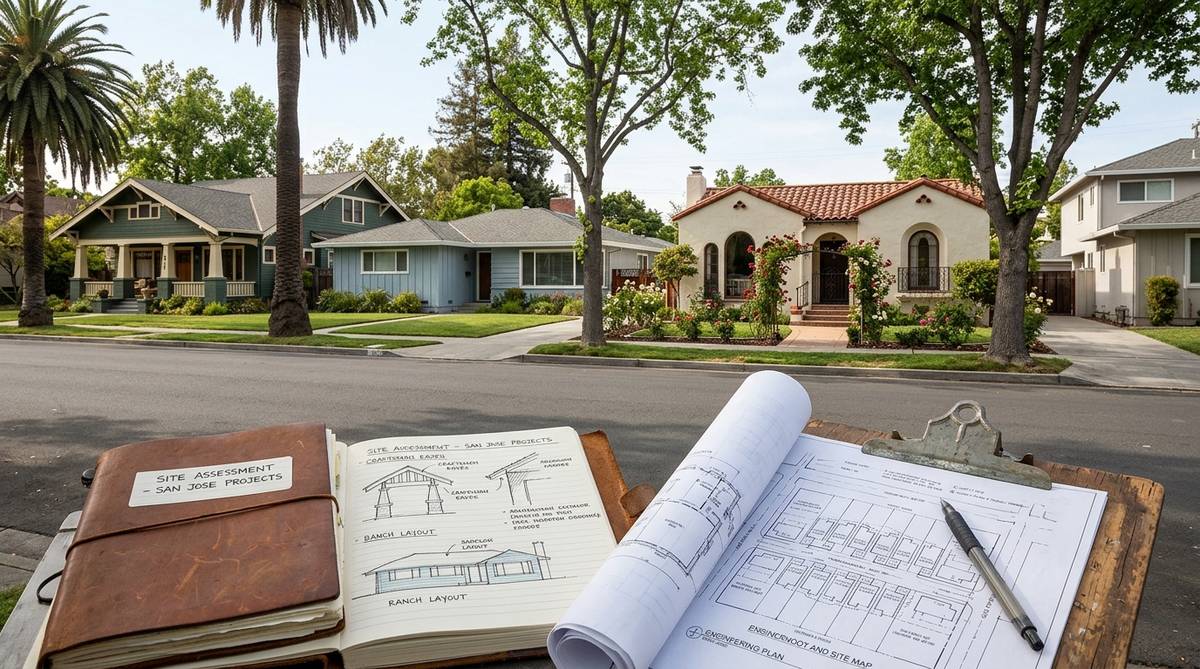
San Jose is not a uniform construction market. Different neighborhoods have different housing stock, different permit histories, and different site conditions that affect how a project is planned and priced.
Willow Glen has a mix of craftsman bungalows, Spanish colonials, and mid-century homes. Many properties have older electrical panels and galvanized plumbing that may need updating once walls are opened. The neighborhood character also means design compatibility matters to neighbors and sometimes to the city.
Almaden Valley features larger lots with newer construction, but homes built in the 1970s and 1980s can still have deferred maintenance and code gaps. ADU projects are common here given lot sizes.
Rose Garden has some of the oldest housing stock in San Jose, with homes dating to the 1920s and 1930s. Seismic retrofitting, knob-and-tube electrical, and cast-iron drain replacement are common discoveries once work begins.
Cambrian is a mix of post-war ranch homes and 1960s construction. Slab foundations are common, which affects plumbing routing for kitchen and bathroom remodels.
Evergreen has newer construction overall, but the hillside terrain can create drainage and grading challenges for additions and ADU projects.
A general contractor who has worked across these San Jose neighborhoods understands what to expect before demo starts. That local knowledge reduces surprises and protects your budget.
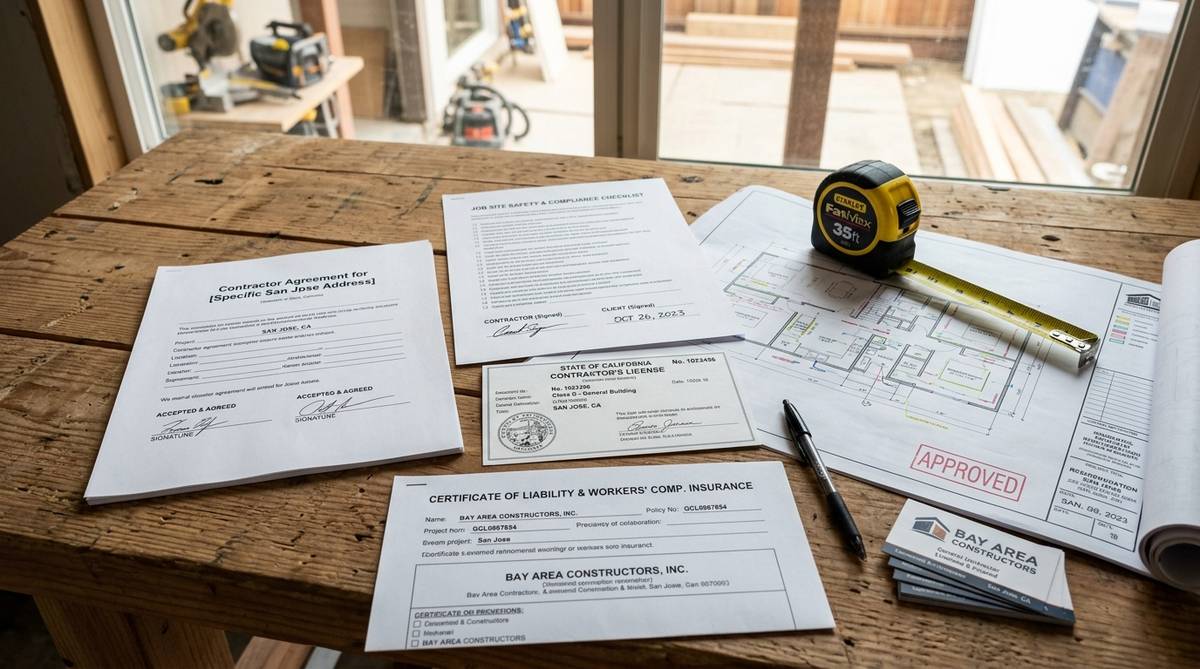
Before committing to any general contractor in San Jose, get clear answers to these questions:
A contractor who answers these questions clearly and without hesitation is demonstrating the kind of transparency that protects you throughout a project. One who deflects, minimizes, or gets defensive is showing you something important before work even begins.
Ready to start? Contact Maison Remodeling at (408) 384-3317 or visit our contact page to schedule a consultation.
Visit cslb.ca.gov and search by license number or business name. Confirm the license is active, the classification covers your project type, and there are no disciplinary actions on record. This takes about 30 seconds and should be your first step before any contractor conversation.
California law limits home improvement contractor deposits to 10% of the contract price or $1,000, whichever is less. Any contractor requesting more than this before work begins is violating state law. Progress payments tied to construction milestones are standard and appropriate after the initial deposit.
Most kitchen remodels in San Jose require permits if they involve electrical work, plumbing changes, structural modifications, or appliance relocations. A licensed general contractor will identify which permits are required and manage the submission and inspection process. Unpermitted work can create problems at resale and may require costly corrections.
Permit review timelines in San Jose vary by project complexity. Simple residential projects may receive over-the-counter approval, while larger scopes with structural or mechanical changes typically take two to eight weeks for plan review. A contractor with local experience can help prepare complete submissions that reduce correction rounds and speed up approval.
A complete remodeling contract in San Jose should specify the full scope of work, materials and allowances, project timeline, payment schedule tied to milestones, permit responsibilities, subcontractor information, change order procedures, and workmanship warranty terms. Never start work without a signed written contract.
One call. Honest pricing. No pressure. Your dream remodel is closer than you think.
With Omer Alon· 500+ projects completed · San Jose's top-rated remodeling team
Book Free ConsultationThe right energy efficient home upgrades cut utility bills and qualify for Bay Area rebates. Here is what pays back fastest and how to bundle upgrades into your remodel.
ADU garage conversion costs in California range from $80,000 to $200,000. This guide breaks down every cost factor, the San Jose permit process, and why garage conversions beat ground-up ADUs on price.
Remodel vs renovation: they sound the same but mean different things. Learn the key differences, cost implications, and which one your project actually needs.
Get a free in-home estimate from San Jose's top-rated remodeling team.