Bathroom remodeling in Sunnyvale costs between $15,000 and $65,000 in 2026, with most mid-range projects landing in the $25,000 to $45,000 range. That spread reflects the wide variety of homes in Sunnyvale, from compact 1950s ranch houses in Birdland and Cherry Chase to larger 1970s tract homes in Lakewood Village and the neighborhoods surrounding Downtown Sunnyvale.
If you are planning a bathroom remodel in Sunnyvale, the most important thing to understand upfront is that local housing stock shapes your project in ways that national cost guides never mention. Cast-iron drain pipes, galvanized supply lines, and original tile-over-drywall wet areas are common in homes built between 1950 and 1975. Those conditions affect both budget and timeline before a single new tile goes up.
This guide is written specifically for Sunnyvale homeowners. You will find local cost ranges, permit process details, neighborhood-specific considerations, and design ideas that work well in the ranch and tract home layouts that define most of Sunnyvale's residential streets. For a broader look at bathroom costs across the Bay Area, see our bathroom remodeling cost guide for San Jose and our full bathroom remodeling service page.
Sunnyvale Bathroom Remodel Costs in 2026
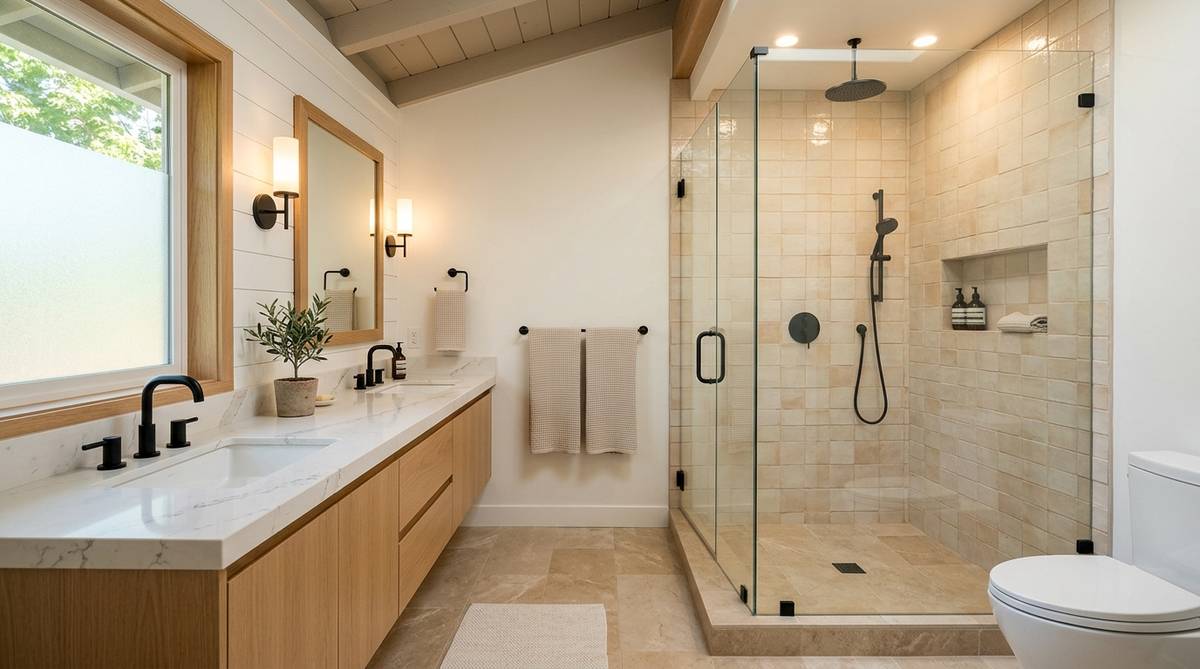
Sunnyvale sits in the heart of Silicon Valley, and labor rates reflect that. Skilled tile setters, licensed plumbers, and finish carpenters in Santa Clara County price above national averages, often by 25% to 40%. That premium is real and should be in your planning numbers from day one.
| Project Scope | Cost Range (Sunnyvale 2026) |
|---|
| Half-bath refresh | $8,000 - $14,000 |
| Guest bathroom mid-range remodel | $15,000 - $32,000 |
| Master bathroom full remodel | $32,000 - $55,000 |
| Luxury master bathroom | $55,000 - $90,000+ |
These ranges assume permitted work with licensed trades. Unpermitted shortcuts may look cheaper upfront but create real problems at resale in a market where buyers and their agents scrutinize permit history carefully.
What Makes Sunnyvale Bathrooms Different
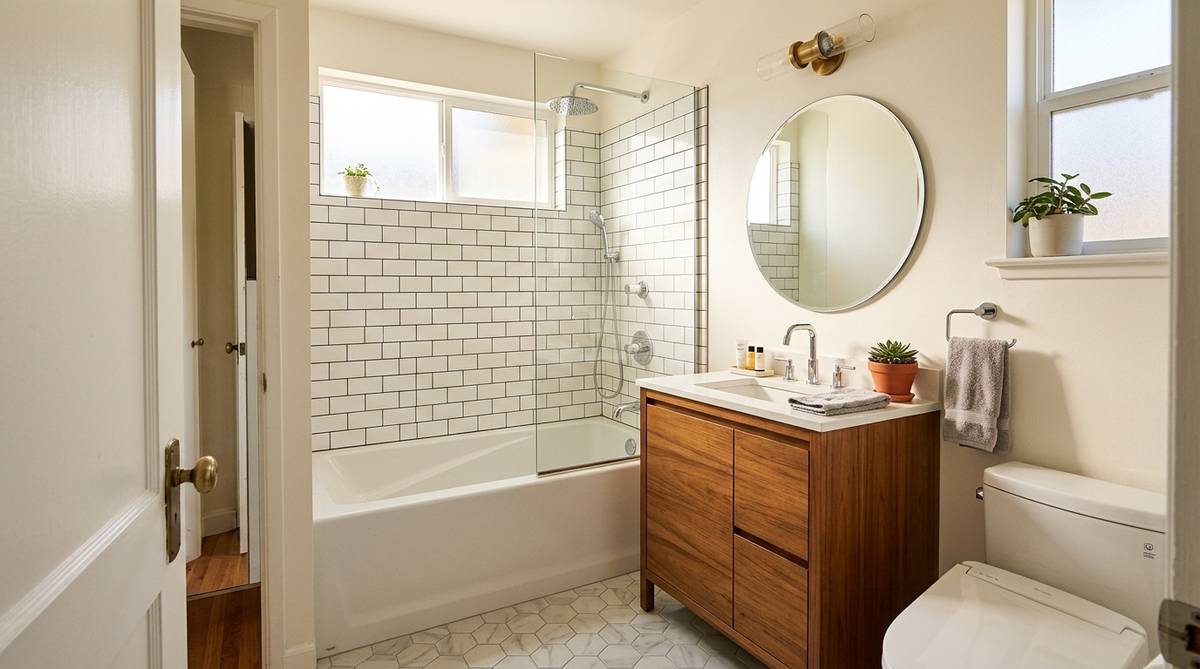
Sunnyvale's residential neighborhoods were built in waves. Downtown Sunnyvale and Birdland have a high concentration of homes from the 1950s and early 1960s. Lakewood Village and Cherry Chase include more homes from the late 1960s through the mid-1970s. Each era has its own set of bathroom conditions that affect remodel scope.
Cast-Iron Drain Pipes
Homes built before 1970 in Sunnyvale commonly have cast-iron drain pipes. Cast iron can last 50 to 75 years, but many of these pipes are now at or past that range. Once walls open for a remodel, contractors often find corrosion, root intrusion, or partial blockages. Replacing cast-iron drains in a Sunnyvale bathroom typically adds $1,500 to $4,000 to project cost depending on pipe length and access.
Galvanized Supply Lines
Galvanized steel supply lines were standard in Sunnyvale homes through the 1960s. They corrode from the inside out, reducing water pressure and eventually failing. If your home still has galvanized supply lines, a bathroom remodel is a good time to replace them with copper or PEX. Budget $800 to $2,500 for supply line replacement in a typical Sunnyvale bathroom.
Original Tile-Over-Drywall Wet Areas
Many Sunnyvale bathrooms from this era have tile installed directly over standard drywall rather than cement board or a proper waterproof substrate. When that tile is removed, the drywall often comes with it. Proper wet-area reconstruction with cement board, waterproofing membrane, and new tile is the right fix. It adds cost but prevents future moisture damage and mold.
Ranch Home Bathroom Layouts
Sunnyvale ranch homes typically have compact bathroom footprints, often 40 to 60 square feet for a full bath. The original layouts were functional but not generous. Many homeowners ask whether they can expand the footprint. In most cases, the answer is yes, but it requires moving walls, which triggers structural review and additional permit scope. Keeping the existing footprint and maximizing it with smart layout choices is usually the more cost-effective path.
Sunnyvale Permit Process for Bathroom Remodels
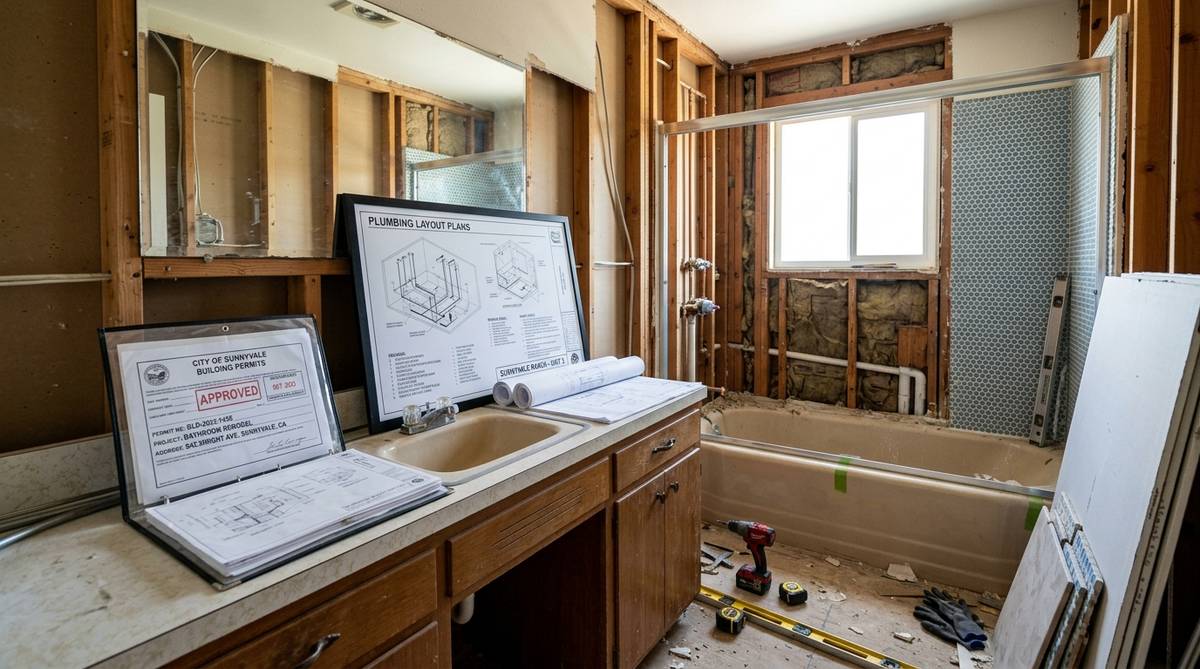
The City of Sunnyvale Building Division handles residential bathroom permits. Most bathroom remodels that include plumbing, electrical, or structural work require a permit. Cosmetic-only work, such as replacing a vanity top or painting, generally does not.
For a typical Sunnyvale bathroom remodel, expect:
- Permit application and plan review: 2 to 4 weeks for standard residential scope
- Permit fees: Roughly $400 to $1,200 depending on project valuation
- Required inspections: Rough plumbing, rough electrical, framing (if walls are opened), waterproofing, and final
- Inspection scheduling: Usually 1 to 3 business days lead time per inspection
Sunnyvale has been working to streamline residential permit processing, and online permit applications are available for many project types. A contractor who handles permit coordination as part of their scope will keep your project moving through inspections without delays.
Neighborhoods and What to Expect
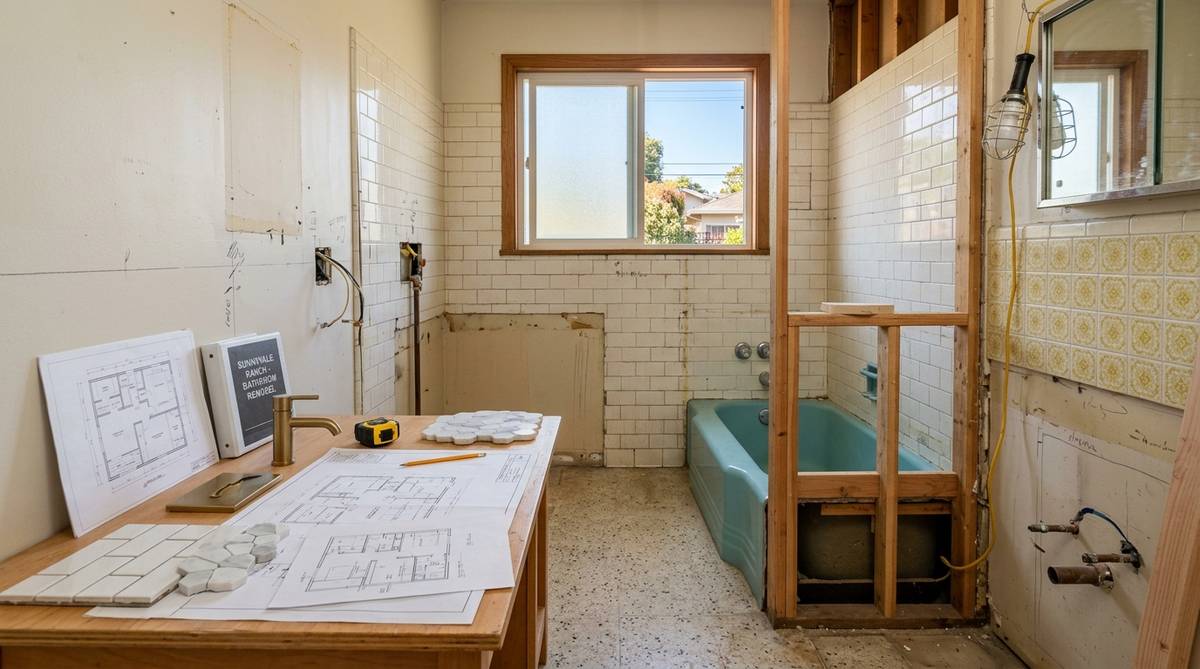
Downtown Sunnyvale
Homes near Downtown Sunnyvale tend to be older, often 1950s construction. Bathrooms in this area frequently have original cast-iron tubs, small footprints, and older plumbing infrastructure. Remodels here often involve more behind-the-wall work than newer neighborhoods.
Birdland
Birdland is one of Sunnyvale's most established neighborhoods, with homes primarily from the late 1950s and 1960s. Bathroom conditions are similar to Downtown Sunnyvale. Many homeowners in Birdland are doing full gut remodels to bring bathrooms up to current standards.
Lakewood Village
Lakewood Village homes are generally from the late 1960s and early 1970s. Bathrooms tend to be slightly larger than in the oldest Sunnyvale neighborhoods, and some have already been partially updated. Partial updates can create complications when new work needs to integrate with older finishes or non-standard plumbing configurations.
Cherry Chase
Cherry Chase includes a mix of 1960s and 1970s homes. Bathroom conditions vary widely depending on whether previous owners did any updates. It is common to find one bathroom that has been refreshed and another that is still entirely original.
Design Ideas That Work in Sunnyvale Ranch Homes
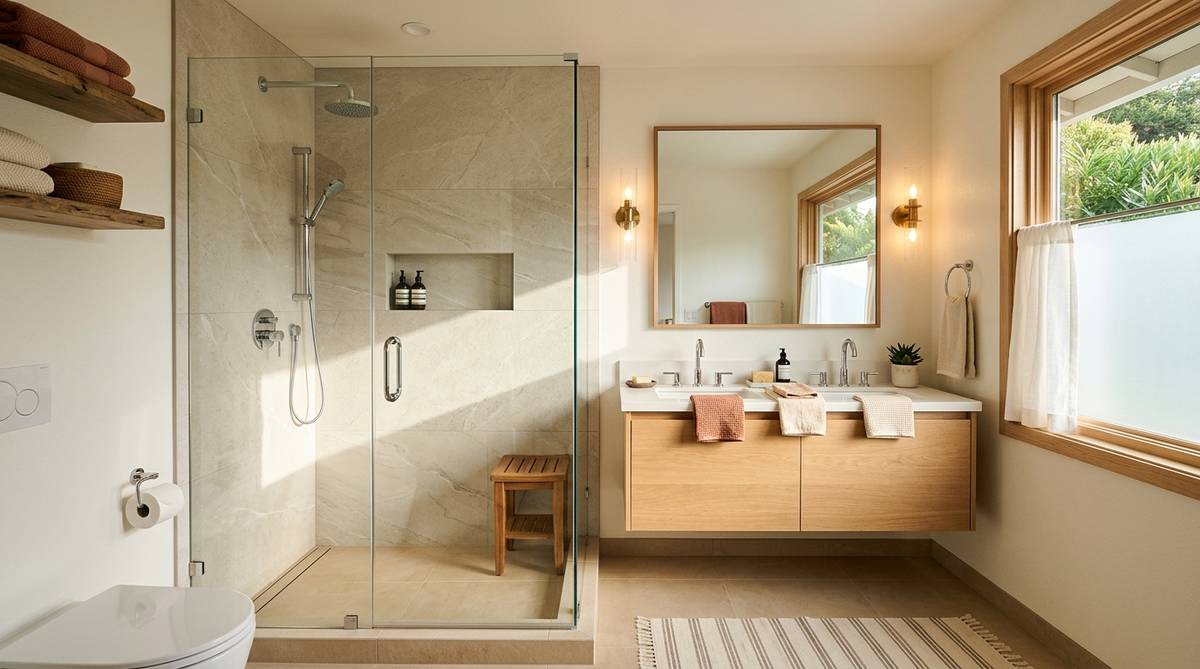
Ranch home bathrooms have specific design constraints. Low ceilings, compact footprints, and limited natural light are common. These ideas work well within those constraints.
Large-Format Tile on Floors and Walls
Large-format tile, typically 12x24 or 24x24, makes small Sunnyvale bathrooms feel bigger by reducing grout lines and creating a cleaner visual field. Rectified tile with tight joints is the current standard for this look.
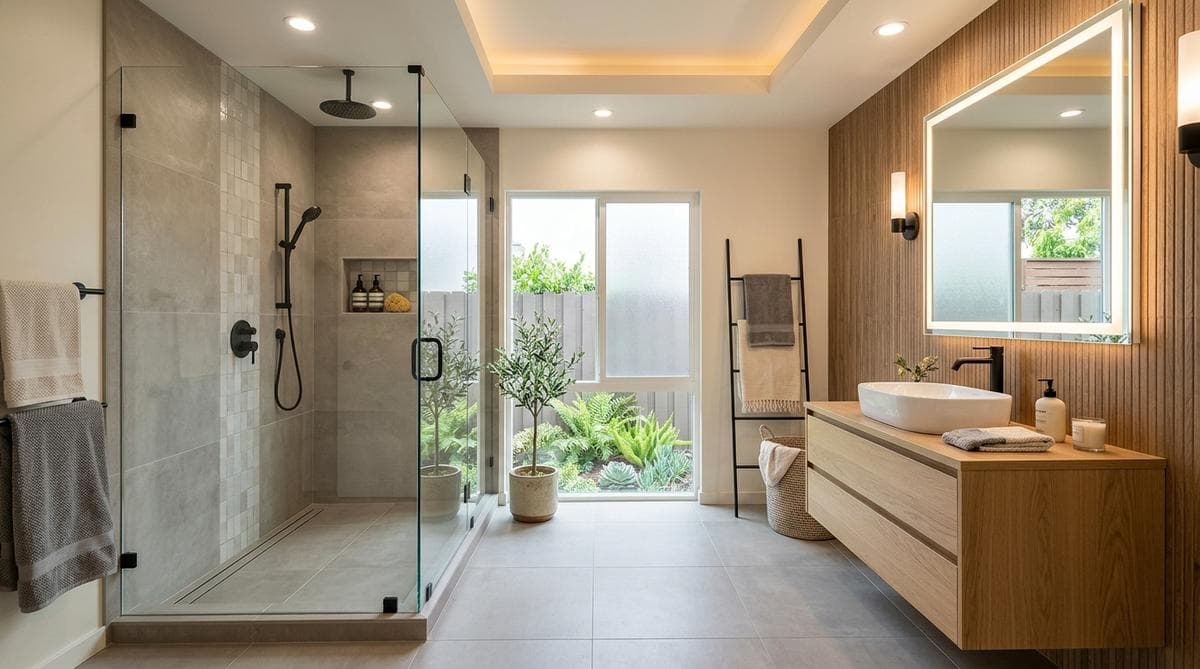
Frameless Glass Shower Enclosures
Frameless glass keeps the visual space open in compact bathrooms. It also photographs well, which matters for resale in Sunnyvale's competitive market. A 3/8-inch or 1/2-inch tempered glass panel with minimal hardware is the most popular choice.
Floating Vanities
A floating vanity with open floor space underneath makes a small bathroom feel larger. It also makes cleaning easier. Pair it with an integrated sink and a simple rectangular mirror for a clean, current look.
Walk-In Shower Conversion
Many Sunnyvale homeowners are converting original tub-shower combos to walk-in showers in master bathrooms. This works well when the household no longer needs a tub for young children. A curbless or low-threshold shower with a linear drain is the most accessible and visually clean option.
Warm Neutral Palettes
Warm whites, soft greiges, and natural wood tones work well in Sunnyvale homes. They photograph well, appeal to a broad buyer pool, and age better than trend-specific color choices.
Cost Breakdown for a Typical Sunnyvale Bathroom Remodel
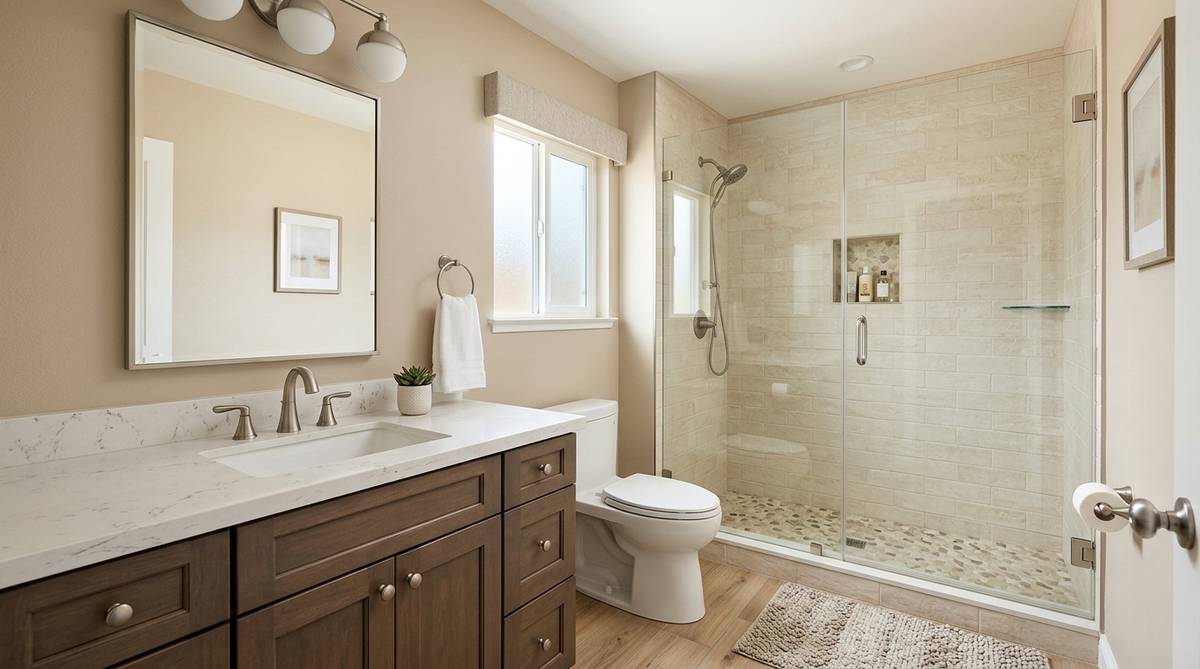
For a mid-range guest bathroom remodel in Sunnyvale, here is how budget typically allocates:
| Category | Share of Budget |
|---|
| Labor | 28-35% |
| Tile and flooring | 15-20% |
| Vanity and cabinets | 15-22% |
| Shower or tub system | 12-18% |
| Plumbing fixtures | 8-12% |
| Permits and design | 4-7% |
Labor is the largest category in Sunnyvale because Bay Area trade rates are high and wet-area work is technically demanding. Cutting labor costs by hiring unlicensed workers creates permit, warranty, and resale risk that is not worth the short-term savings.
How Long Does a Bathroom Remodel Take in Sunnyvale?
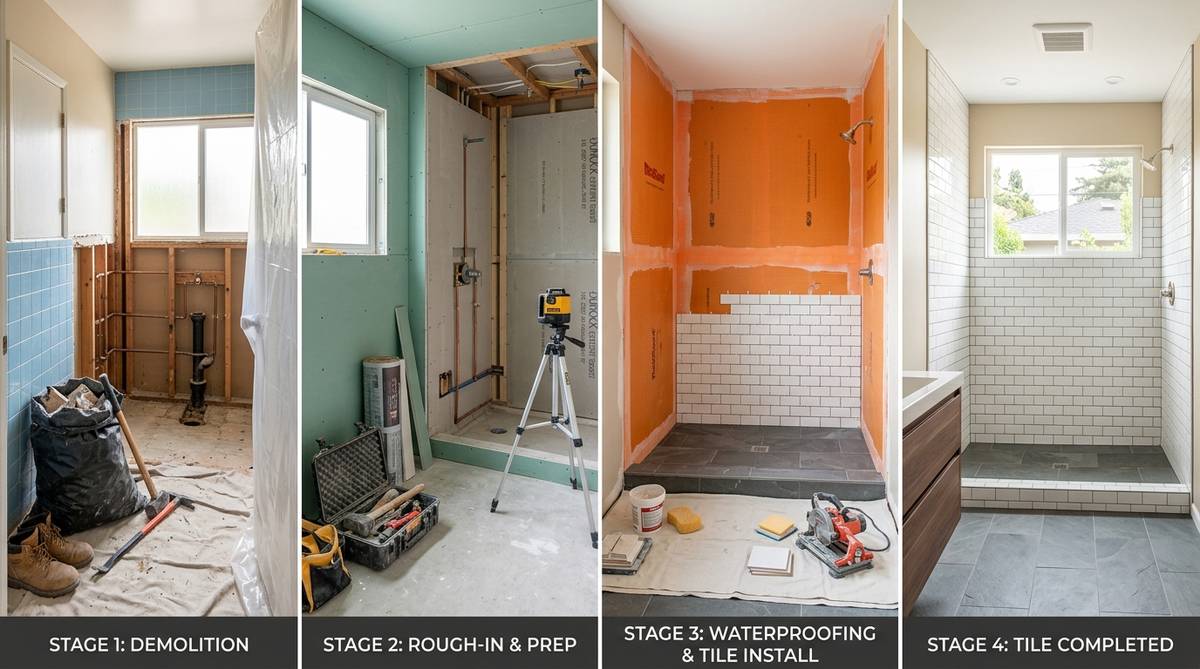
A typical Sunnyvale bathroom remodel takes 5 to 9 weeks from permit approval to final walkthrough. Here is a realistic breakdown:
- Design and selections: 1 to 3 weeks
- Permit application and review: 2 to 4 weeks
- Demolition and rough work: 3 to 5 days
- Inspections (rough plumbing, electrical, framing): 1 to 2 weeks with scheduling
- Tile and waterproofing: 5 to 8 days
- Finish installation: 3 to 5 days
- Final inspection and punch list: 3 to 5 days
Older Sunnyvale homes often add time because of unexpected conditions found during demolition. A contractor who builds schedule buffer for discovery work will keep your project on track better than one who assumes everything goes smoothly.
When to Repair vs. Remodel
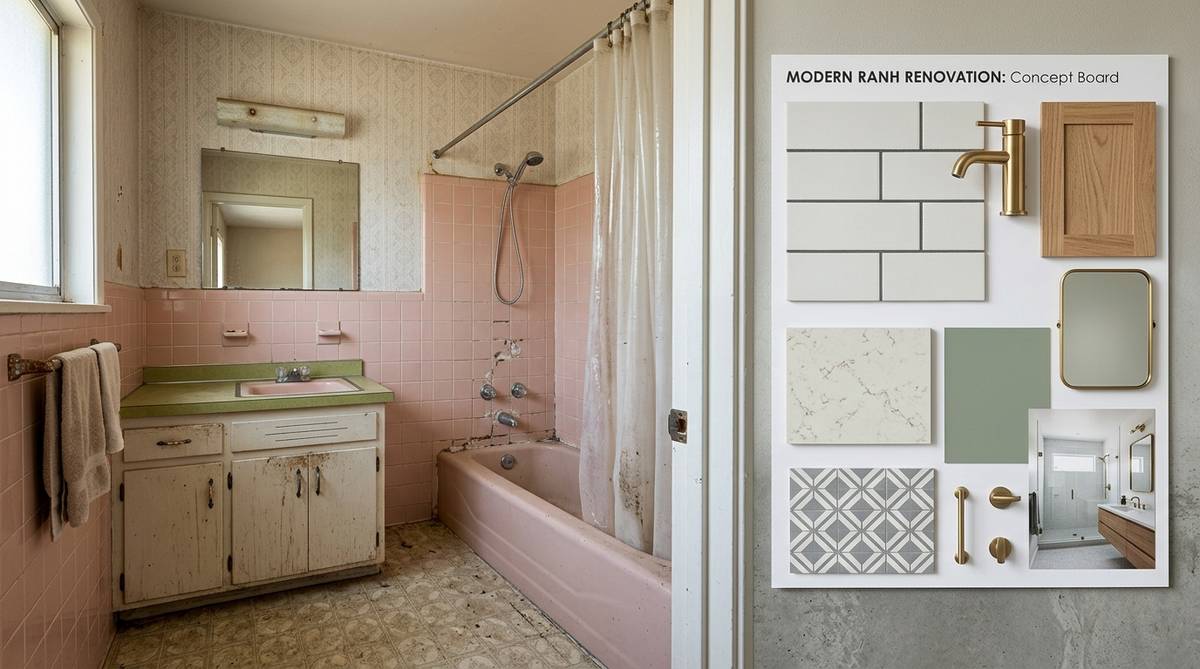
Not every Sunnyvale bathroom needs a full remodel. Here is a simple framework:
Repair makes sense when:
- The layout works well and plumbing is in good condition
- Only one or two elements are failing or outdated
- Budget is limited and the home is not being prepared for sale
Remodel makes sense when:
- Multiple systems are aging or failing
- The layout does not work for your household
- You are preparing the home for sale and the bathroom is a clear weak point
- You want to address deferred maintenance comprehensively in one project
For Sunnyvale homes built before 1970, a full remodel often makes more financial sense than repeated repairs because the underlying systems are all aging together. For more design inspiration, see our bathroom design ideas guide.
Frequently Asked Questions
How much does a bathroom remodel cost in Sunnyvale?
Most Sunnyvale bathroom remodels cost between $15,000 and $65,000 in 2026. Guest bathrooms typically run $15,000 to $32,000, while full master bath remodels commonly land between $32,000 and $55,000. Luxury projects can exceed $65,000.
Do I need a permit for a bathroom remodel in Sunnyvale?
Yes, if the work includes plumbing, electrical, or structural changes. The City of Sunnyvale requires permits for most bathroom remodels beyond purely cosmetic updates. Working without permits creates problems at resale and can trigger costly corrections.
How long does a bathroom remodel take in Sunnyvale?
Most projects take 5 to 9 weeks from permit approval to completion. Older homes in Sunnyvale often take longer because of unexpected conditions found during demolition, such as cast-iron drain replacement or wet-area substrate repair.
What is the most common hidden cost in Sunnyvale bathroom remodels?
Cast-iron drain pipe replacement and wet-area substrate repair are the most frequent hidden costs in Sunnyvale homes built before 1970. Budget a contingency of 10% to 15% for these discoveries.
Should I convert my tub to a walk-in shower in Sunnyvale?
For master bathrooms where the household no longer needs a tub, a walk-in shower conversion is a popular and practical upgrade. It improves daily function and photographs well for resale. For the only bathroom in a home, keeping a tub is usually the better choice for broad buyer appeal.
Ready to start? Contact Maison Remodeling at (408) 384-3317 or visit our contact page to schedule a consultation.